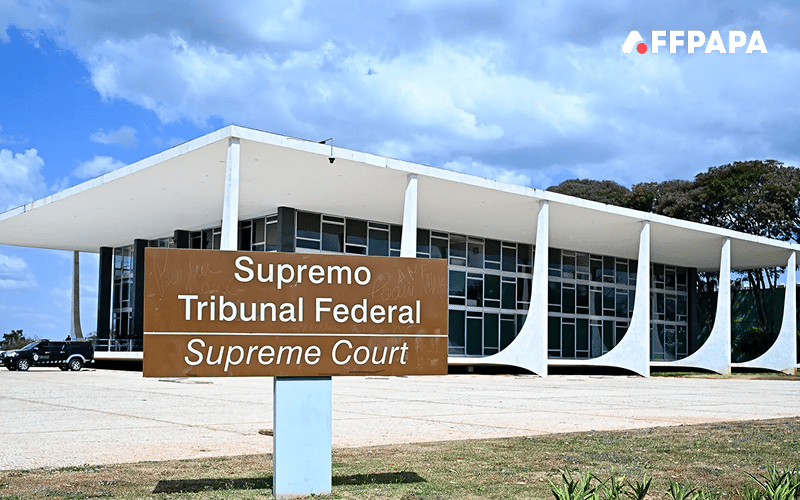
Justice Luiz Fux, who is the rapporteur for eight legal challenges to the measure, led the session, where the Ministries of Finance, Health and Justice, and the Attorney General’s Office (AGU) all defended the ban as a way to protect families from the financial and health damage caused by gambling. The Finance Ministry estimated that bettors had sent around R$62 billion to the sector.
Jorge Messias, head of the AGU, shared:
“Recognising this effort does not oblige us to close our eyes to its limitations. Reviewing a policy in light of its results is the responsibility of the State.”
On the other side, the Brazilian Institute for Responsible Gaming (IBJR) asked Fux to suspend the measure until Congress votes on it or the court rules on the merits, and the ANJL argued for stricter rules instead of a full ban. Broadcasters’ association Abert said complaints about illegal betting ads had jumped from 2.3 to 8.5 a day since the ban came in, while the mayors’ association ANPV criticized the cancellation of licenses that cost operators R$30 million each without refunds.
Celso Mori, IBJR representative, stated:
“The country, through its Congress, opted for regulated gambling. But it didn’t happen overnight. It was after years of legislative processes.”
Clubs including Flamengo and Corinthians asked for better regulation rather than prohibition, and the State University of Rio de Janeiro’s regulation lab proposed eight safeguards for reopening the market, such as a betting limit per taxpayer number and a ban on credit-funded bets.
Fux gave no indication of how he will rule, and Congress’s 60-day window to vote on the measure, which ends on November 23, will be extended automatically into early 2027.