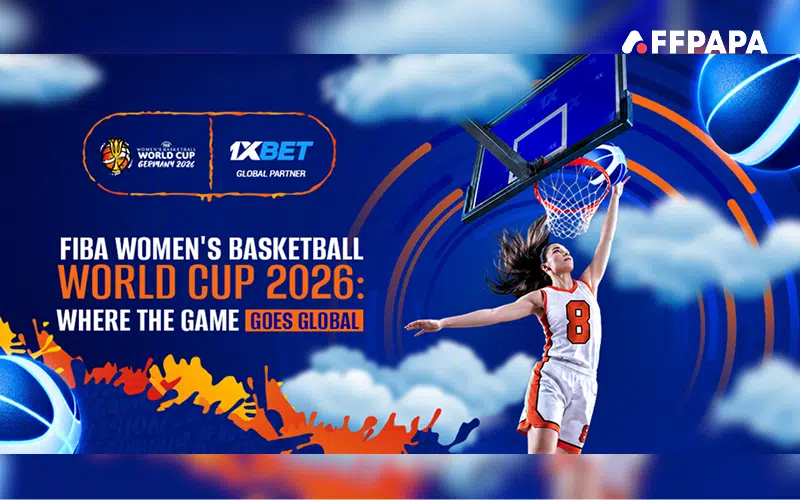
The 20th FIBA Women’s Basketball World Cup will take place in Berlin from September 4 to 13, 2026, as the tournament is not only a major event for international basketball but also another sign of how quickly women’s sports are growing in terms of audiences, media coverage, and commercial value.
Moving the tournament from Australia to Germany also highlights its growing international reach. The 2026 edition will feature more teams than the previous tournament, while the commercial and media interest around women’s basketball continues to expand.
The biggest change for the 2026 World Cup is the number of participating teams. After 12 teams competed in 2022, FIBA has expanded the tournament to 16 national teams, bringing the competition back to the format used between 1990 and 2018 and giving the 2026 edition its biggest lineup yet.
For Germany, the tournament is also a huge return, as the country will host the Women’s Basketball World Cup for only the second time, following the 1998 edition. Berlin 2026 will therefore be an important moment for German basketball, while also facing the high expectations created by the record-breaking tournament in Sydney four years ago.
What Sydney 2022 changed
The scale of the 2026 event is easier to understand by looking at what happened in Sydney in 2022. The tournament set a new attendance record for the FIBA Women’s Basketball World Cup, with around 145,000 spectators attending games in Australia. The final between China and the United States was played in front of a sold-out crowd of more than 15,000 fans.
The audience outside the arenas was even bigger. In China, coverage on CCTV and Tencent reached more than 750 million people, and more than 18 million viewers watched the final on CCTV-5 alone, while another 23 million watched through Tencent.
Digital engagement also reached new levels. The tournament’s official website attracted 1.5 million users, while social media activity generated around 1.1 billion impressions and 14 million interactions.
Video content was another strong growth area. Around 500 million video views were recorded during the tournament, seven times more than during the previous cycle.
These figures showed that women’s basketball was reaching audiences beyond the traditional basketball fan base. The growth was visible across stadium attendance, television audiences, websites, social media, and video platforms.
Women’s basketball becomes a bigger business
The growth of women’s basketball is part of a wider expansion of the women’s sports market.
Revenue across elite women’s sports is expected to reach at least $2.35 billion in 2026. Women’s basketball is playing a major role in that growth and is now estimated to be the highest-earning women’s sport globally.
The sport is expected to generate around $1.03 billion in revenue in 2026, ahead of women’s football at approximately $820 million. In 2024, women’s basketball generated an estimated $710 million, meaning its revenue was projected to increase by more than 40% in just one year.
Broadcast rights, commercial partnerships, and matchday revenue remain the main sources of income. All three areas are closely linked to the growing number of people watching and following women’s competitions.
For major brands, this growing audience creates new opportunities to become part of the women’s sports ecosystem. The partnership between 1xBet and FIBA is another example of this trend, bringing together sports, content, and commercial platforms around one of the world’s major basketball events.
Berlin 2026 takes the next step
Berlin 2026 will build on the momentum created in Sydney rather than starting from zero.
The previous World Cup delivered record attendance, huge television audiences, and strong digital engagement. At the same time, the wider women’s sports market has continued to grow, giving the next tournament an even larger audience and commercial base to work with.
The growing popularity of women’s basketball also creates opportunities for the iGaming industry. Major sporting events can attract large audiences, while affiliate programs such as 1xPartners give partners tools to monetize sports-related traffic.
The 2026 tournament has several reasons to attract attention: 16 national teams, the 20th edition of the World Cup, and the return of the competition to Germany nearly three decades after the country’s previous hosting.
The question now is how far Berlin can take the momentum built in Sydney. With women’s basketball continuing to attract bigger audiences and more commercial interest, the 2026 World Cup could set another benchmark for the sport.