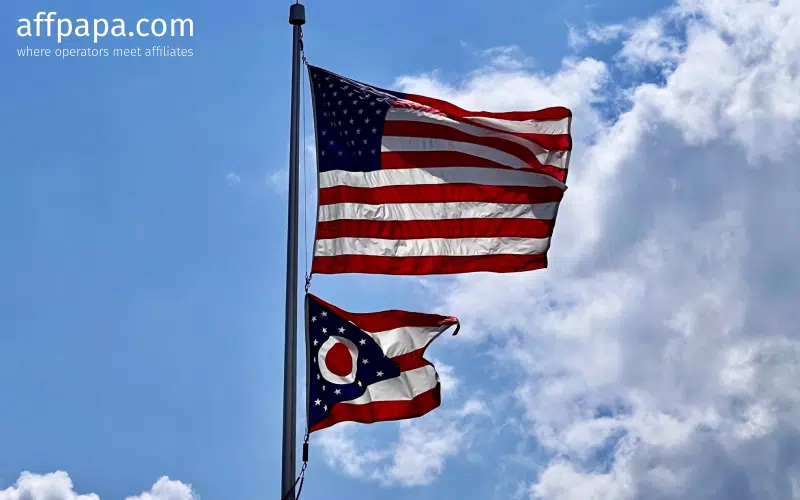
Ohio casinos are split over a bill to legalize iGaming, with major operators offering starkly opposing views during House testimony on House Bill 298 this week.
The legislation, one of two iGaming bills currently under consideration in Ohio, would permit internet-based slots and table games, with proposed license fees set at $50 million upfront and $10 million for five-year renewals.
While some operators support the move as a natural and profitable evolution of the gaming industry, others warned it could have damaging consequences for local jobs and revenues.
Boyd Gaming’s Vice President of Government Affairs, Ryan Soultz, testified in favor of HB298, stating:
“If we thought this was a threat to our brick and mortar business, I wouldn’t be here today to speak on this bill. We believe iGaming, if legalized through the proper framework, can be beneficial to both the state and existing gaming venues. iGaming is a natural step in the evolution of the gaming industry. We believe that it is highly complementary to our existing land-based operations and an opportunity to engage our customers while they are not physically at our properties.”
Dean Hestermann, Vice President of Issues Management and Strategic Communications at Caesars Entertainment, shared Soultz’s opinion:
“How exactly do we employ iGaming to drive our brick-and-mortar businesses? Through omni-channel promotions that encourage digital players to experience our retail properties.”
Hesterman further mentioned that their data shows existing in-person customers who try online products increase their casino visits by 55%, from 11.5 trips to 17.8 annually. Furthermore, their online customers who visit casinos play nearly twice as much as in-person-only customers.
Opposing voices came from representatives of Jack Entertainment and Churchill Downs, both part of the National Association Against iGaming:
“While iGaming might benefit the state’s coffers, online casinos hurt in-person casinos. Retail play is being poached to the online platforms, which leads to job layoffs and reduced local taxes.”
The National Association Against iGaming further emphasized the benefits of on-site gambling. They stated that in-person gaming provides effective safeguards to prevent underage gambling, limit excessive access, and address problem gambling through established support programs. Additionally, in-person gaming drives local economic growth by generating stable jobs and reinvesting revenues into schools, infrastructure, and public services.
Even among supporters of iGaming, the proposed $50 million license fee drew sharp criticism. Several operators urged lawmakers to reconsider the figure, calling it disproportionately high compared to other states.
For instance, Michigan charges just $100,000 for a license, with $50,000 annual renewals, while Pennsylvania, the priciest state, requires $10 million upfront and $250,000 for renewals.
Ohio’s current proposal would make it the most expensive state in the country to launch an iGaming operation.