


Regulators keep tightening the rules, competition for traffic is heating up, and players have never been more demanding about content quality. Guided by industry experts, the...


Alfaleads Network brought together industry experts to discuss search traffic in iGaming, hot GEOs, and why classic casino reviews don’t work like they used to.
There is a lot of talk across LinkedIn and industry forums that SEO is dying. Search results have changed thanks to Google’s algorithm updates, so users turn to social media, YouTube, and AI chats more than to traditional search engines.
However, Alfaleads Network is sure that SEO is not dying; it’s evolving. SEO is still one of the most stable and predictable sources of high-quality traffic. It just requires more strategy, depth, and flexibility, and the key is to adapt.
At the iGaming Club Conference Malaga 2025, Alfaleads spoke with industry experts about their vision on current trends and advice on how to keep up with SEO traffic.

John Wright, CEO and Co-Founder at StatsDrone, believes that Google has a lot of things happening with it. The company announced a whole suite of AI products at Google I/O 2025, and the disruption needs to be accepted. It’s a disruption in how Google delivers (or rather doesn’t) give traffic to affiliate sites.
John Wright further shares:
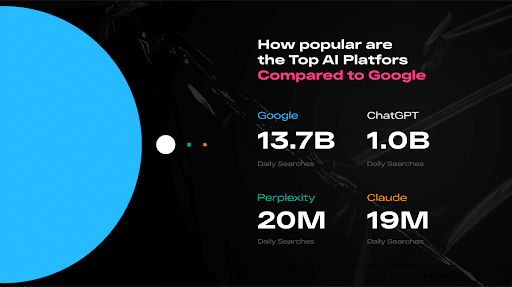
We also have to understand that people’s changes in search habits are also affecting Google’s dominance in the search market. Google is losing market share of search to other engines like ChatGPT, Perplexity, BING, and even social media networks like YouTube, TikTok, Reddit, X, Facebook, and Instagram.
Daria Lazareva, SEO Team Lead at alfa:search, added that Google updates are rolling out more frequently than ever, and they’ve made life significantly harder for SEO teams. In the past, there were updates every 2-3 months, but in 2025, they’re landing almost monthly, often followed by equally frequent rollbacks.
Daria Lazareva says:
“We support teams navigating this constant change — and we’ve noticed a clear pattern: the top-ranking players in 2025 are largely the same ones who dominated in 2024. That’s because they’re fast to adapt, flexible in their SEO strategies, and not afraid to move away from outdated Google “best practices” when the algorithm demands it.”
However, it’s still too early to claim that Google is losing ground to AI platforms.

Parasite SEO and viral boosts may still offer short-term wins, but sustainable traffic will depend on authoritative, geo-targeted content and strong entity or E-E-A-T signals. That’s what Darko Ivanoski, Head of SEO at Gentoo Media, thinks.
He shares:
“The most significant shift I’ve observed is the surge of sponsored content ranking highly, often published on high-authority domains that are completely unrelated to the target niche. This resembles classic Parasite SEO: third-party content strategically placed on powerful websites to leverage their Domain Rating (DR), effectively outranking well-optimized, niche-specific sites through sheer authority rather than topical relevance. This trend isn’t limited to iGaming, it’s occurring across multiple niches.”
John Wright, CEO and Co-Founder at StatsDrone, explains that the concept of Parasite SEO is not new and isn’t as bad as it sounds. It’s essentially using another entity’s reputation to help your own.
Wright adds:
“This concept will always exist, I mean, tell me a single company that wouldn’t want to be featured in a site like BBC, assuming it was in a positive light. At some point, when you are building a brand, that brand proof has to come from the word of others.
I think this is why we are seeing sites with user-generated content (UGC) getting stronger as time goes on. This is using authority. So yes, people will abuse the concept of authority, but unfortunately, this is up to either regulators to solve, or for companies like Google to stop making it so easy to abuse, which impacts everyone else.”
Content placement on high-authority domains has become more sophisticated, powered by AI, advanced internal linking, and refined cloaking techniques. Middlemen are now emerging who broker these kinds of placements, chasing fast profits. And while search engines claim to be cracking down on such tactics, these pages continue to hold strong positions in the SERPs.
Daria Lazareva, SEO team lead at alfa:search, says:
“A recent case made waves across the industry: a UK school’s domain was hijacked to promote casino content. From what we’re seeing on the ground, parasite SEO isn’t just a passing trend — it’s become a full-blown industry.”
Content matters for both SEO and conversions (e.g., FTDs). Good content not only drives more traffic but also improves its quality and convertibility. It even impacts the effectiveness of paid campaigns.
Martin Calvert, Marketing Director at ICS-digital, thinks:
“To be completely honest, in our industry, quality isn’t always everything. Users come with a strong intent — they want to play, they want to place bets. Sometimes they’re willing to overlook poor content if it ultimately gets them what they want.
Because of this, both operators and affiliates may not even realize they’re operating below their potential. They’re still making money, still getting traffic — but they could earn even more if they focused more on content quality.”
 The regulatory changes have been a seismic shift for both operators and affiliates. A few years ago, there was a frantic race to promote the biggest bonus. The content was a loudspeaker and was all about promotional offers, creating a revolving door of players chasing the next deal.
Mark McGuinness, Head of Marketing at Better Media Ltd, continues:
“That model has changed with regulations. With strict affordability checks and bonus restrictions, you can no longer rely on that initial intent demand for the largest bonus offers. The real challenge is that it forces a complete pivot in everyone’s strategy. Content has had to mature from just shouting about offers to becoming a trusted advisor, focusing on genuine value, expert tips, and responsible gambling and brand messaging. For retention, it means you earn loyalty the hard way. It’s no longer about a one-off transaction; it’s about building a lasting, trusted relationship with the audience, which is a much slower and more complex task.”
Content in SEO has shifted from volume to depth. Now, expertise, topical authority, and E-E-A-T outweigh sheer output. Quality and relevance win over quantity. But still, it can vary by market. The most important thing is to satisfy search intent. In some niches, expertise works best; in others, content volume does.
Darko Ivanoski, Head of SEO at Gentoo Media, says:
“The main driver of SEO traffic in iGaming over the next 12 months will be topical authority combined with high-E-E-A-T content, strategically supported by niche-relevant backlinks and flawless technical execution. As Google tightens quality signals and launches Google AI Mode, sites that demonstrate deep expertise, user trust, and market-specific compliance, especially in regulated region,s will outperform.”
Daria Lazareva, SEO Team Lead at alfa:search, believes that it all depends on the GEO and the cultural context, so the best thing to do is to constantly study your audience.
She continues:
“For us, it’s a proven fact: behavioral metrics play a major role in rankings. The key question is — what does “normal” behavior look like in your specific SERP? User intent is everything. What is your visitor actually looking for — a deep dive, a 30-minute read, or a product with an intuitive UX?”
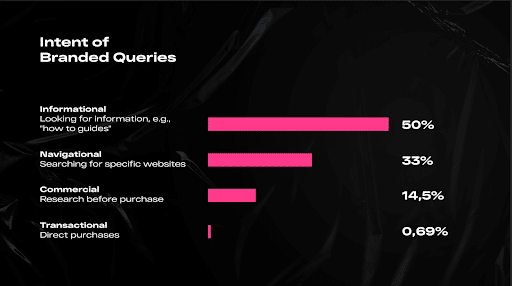
Martin Calvert, Marketing Director at ICS-digital, thinks that one of the key things when working across different cultures is a human-level understanding of what really matters to the local audience. And that goes far beyond academic knowledge of translation, localization, and marketing.
Martin Calvert claims:
“It’s about understanding what players in this particular industry actually like, what resonates with them, what cultural topics will strike a chord. That’s what allows you to create not just accurate, but truly engaging localization.
Many companies fail because they provide a technically correct translation — but it doesn’t motivate the user to take action. Our job is to spark interest and engagement from the local audience. That’s the key to successful campaigns and effective localization.”
The new normal is to adjust to your location. If you’re confident about your rankings across a region, make sure to check your positions in the region’s key cities. The reality might surprise you.
Daria Lazareva, SEO Team Lead at alfa:search, adds:
“Local SEO is becoming a real competitive edge. More and more, we see that the same keyword query can generate entirely different results depending on the city — not just the country. For example, one of our sites might rank #1 in a major European capital, but a completely different site shows up nationally for the same query.”
 Levon Nikoghosyan, CEO at AffPapa, mentions LatAm as a growing GEO in the past couple of years. The region holds a huge potential, especially with the changing dynamics of increasing internet and mobile optimization, and also the regulatory shifts, which always hint at new opportunities. He names Brazil, Mexico, and Colombia as the top 3 GEOs for now.
Levon Nikoghosyan explains:
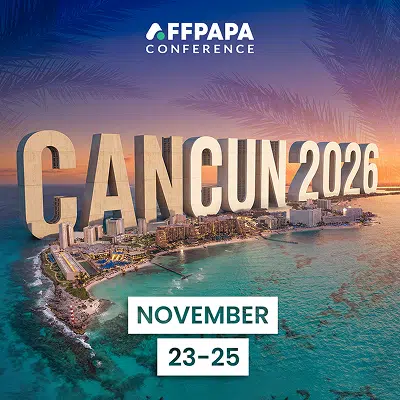
“There was also a natural growing interest within the AffPapa community, which is always the biggest indicator for us of what’s trending in affiliate marketing. This is why we made the decision to take our events outside of Europe for the first time, and host our iGaming Club Conference in Cancun, Mexico, this November.”
Martin Calvert, Marketing Director at ICS-digital, thinks that many factors influence whether a GEO is considered “hot” or not, and it often depends on your own resources. If you can offer a product that fits a particular market, then it doesn’t matter if others see it as promising: you might be the one to actually profit from it.
He continues:
“Right now, everyone’s looking at Brazil — and it really is a hot market. But it might not be your market, because competition there is already intense.
We’re also seeing growing interest in semi-regulated or soon-to-be-regulated markets. I’d still put the U.S. in that category. Looking ahead, the Middle East and other regions where things might shift in 5-10 years are also generating buzz.”
 Catie Di Stefano, Marketing Director at Vegas Kings, mentions the US as an obvious choice. She understands that it’s a very challenging market, and many avoid it because of high license fees and strict regulations, but she believes in its potential.
She further explains:
“For example, in California, there’s currently no sports betting or online casino. That’s why products like sweepstakes are growing so fast. So I believe that in the US, sweepstakes and prediction markets are two areas that will grow and just haven’t received the attention they deserve.
In the US, gambling is seen more like entertainment. People place bets at bachelorette parties or birthday celebrations — it’s common to know you’ll lose money but still have fun.”
Mark McGuinness, Head of Marketing at Better Media Ltd, considers AI excellent for ideation, but human interaction is absolutely needed to overlay the emotional empathy that machine learning cannot yet replicate.
McGuinness says:
“The winners will be businesses that treat AI as functional software, not a magic tool. They will create frameworks and standard operating procedures (SOPs) to guide its use, thereby improving operational flows and efficiencies. The line is crossed when you prioritise output over insight. It must be about genuine improvement, not scaling for the sake of scaling.”
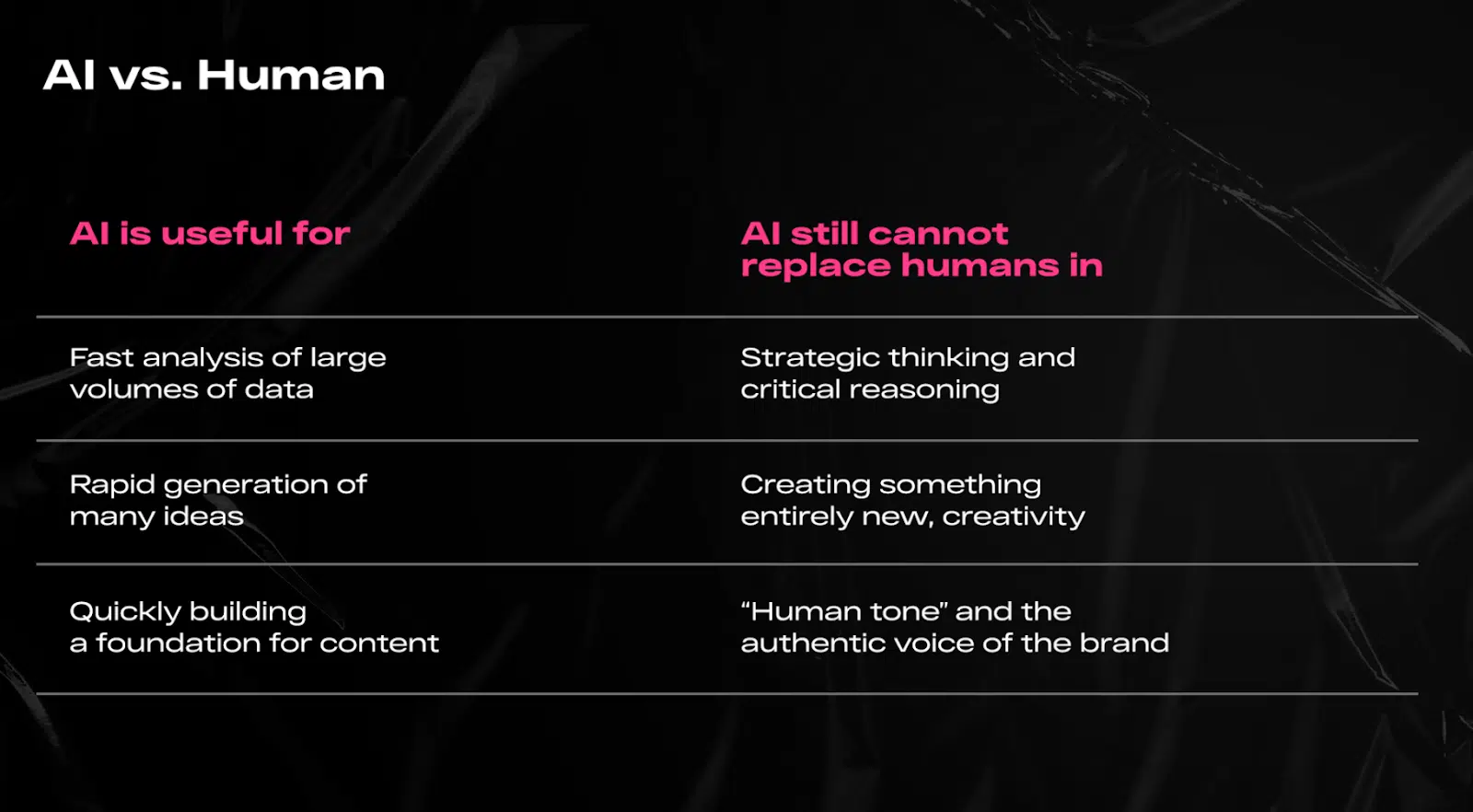
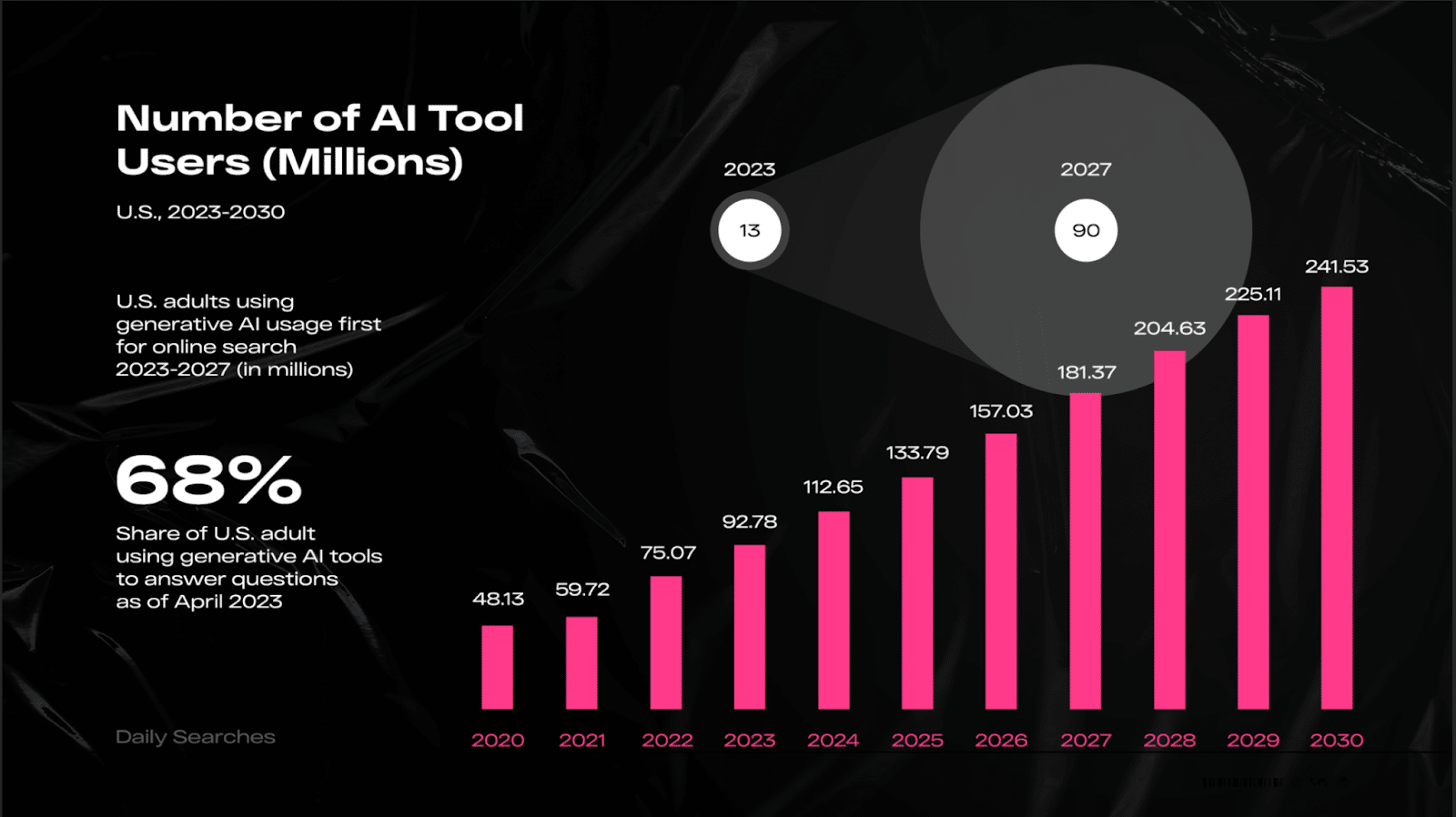
Daria Lazareva, SEO Team Lead at alfa:search, believes that in 2025, AI in SEO is the new normal. But based on work with real teams and real content, without proper human editing, AI-generated texts often fail to pass filters and never make it to the SERP. Manual refinement is key, and it’s one of the biggest SEO trends of the year.
She keeps going:
“Another major shift: optimizing content for AI-first experiences. More users are searching via AI assistants, and the engines themselves are increasingly integrating AI into how they deliver results. Your content should be designed with this in mind.”
Darko Ivanoski, Head of SEO at Gentoo Media, advises correcting technical mistakes many iGaming teams most often make when launching a website:
Levon Nikoghosyan, CEO at AffPapa, suggests picking a niche, going deep into it, and covering every angle it can offer. The goal is to become the go-to source for that topic. Too many affiliates try to rank for everything and end up ranking for nothing. But when you build a full ecosystem of content around one niche, you gain topical authority. Google starts trusting you more, and so do users.
That’s also where E-E-A-T comes in. Google wants to see that there’s a real person with real knowledge behind the content! This will give you both the authority and trust you need to scale your affiliate business later on and make it easier for you to stand out from the already saturated crowd.
Mark McGuinness, Head of Marketing at Better Media Ltd, claims that the most significant growth driver isn’t a channel at all; it’s a deep-seated knowledge of audience personas and behavioural economics. It’s called lifestyle or integrated marketing. It’s about understanding the brain science behind why people make purchasing decisions. The fundamental problem is that real customers don’t think in terms of “channels.” Real customers have a question or a need, and they want it solved. So it’s better to obsess over their journey instead of our marketing silos; that is where real, sustainable growth comes from.
John Wright, CEO and Co-Founder at StatsDrone, thinks affiliates should consider diversifying away from the traditional SEO game into a traffic game. Traffic is everywhere, and the demand for players to end up at casinos and sportsbooks is changing. They will end up in the same place if they have the same intent, but the journey there won’t be as linear as it used to be.
His advice to affiliates is to know the answer to why your affiliate review site is worthy of anybody writing about. The world doesn’t need another casino review site; our world and players want unique data or entertainment. They want products. If you have this, you’ll be on the right side of success.
Martin Calvert, Marketing Director at ICS-digital, believes that great examples of ethical content include PR-driven strategies, such as using ambassadors, influencers, or other forms of authentic marketing. That can work well for SEO, trust-building, and visibility.
He mentions that ten years ago, the typical affiliate was publishing top-10 reviews with 9.5/10 ratings, without ever playing those games. That kind of content is useless. Now, there’s a real opportunity, and need, to do something more honest, engaging, and multimedia-driven: screenshots, videos, sound, etc.
If a market is regulated, ethical content also helps you stay visible without getting blocked by ad platforms. If you go the shady route, you could lose access to those channels in the future. So this isn’t just about “now,” it’s about “what’s next.”
Affiliates that want to succeed in the game should keep in mind that:







 Soft2Bet launches Swedish casino and sportsbook: Lodur
 Entain CEO supports the ban on illegal UK gambling sponsors
 Wynn Resorts addresses data breach and ransom demand claims Soft2Bet launches Swedish casino and sportsbook: Lodur Entain CEO supports the ban on illegal UK gambling sponsors