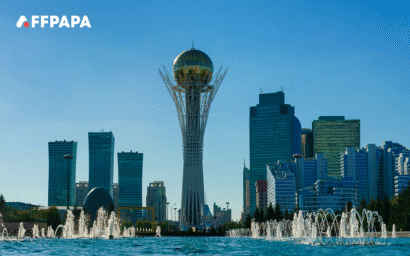
The government of Kazakhstan is planning to expand the country’s legal gambling infrastructure and double the number of gambling tourists by adding casino zones in four...

The iGaming industry is entering one of its most regulated and competitive periods to date. Despite tightening gambling regulations worldwide, the iGaming market continues to grow. According to Grand View Research, the industry is rising at a compound annual rate of 11.90% and is expected to reach $153 billion by 2030.
This article will guide you through iGaming 2026 and break down the most important changes in the gambling industry to help save your time and prepare you for the upcoming events.
Table of Contents
If there’s one thing that’s clear for iGaming in 2026, it’s that the industry is not moving in just one direction globally. While some markets are tightening rules, others are expanding and inviting new players in. For everyone in iGaming, understanding these regional differences is not just a “nice to have”; it’s now a survival skill.
Now, let’s discuss iGaming markets in 2026, as this will be a huge help when deciding where and how to operate.
In 2026, Europe isn’t just tightening the screws on iGaming; it’s setting an example of what a compliant and sustainable gambling industry should look like. For operators, this means one thing: Europe is no longer the easiest to enter for iGaming in 2026, but it still remains one of the most valuable markets.
Since 2025, the value of the European gambling industry has been rising with a 5.32% compound annual growth rate. According to European Gaming, in 2025, digital gambling revenue in Europe reached over €50 billion, showing the expansion and importance of the region in the global gambling industry. European iGaming regulations will see a surge of legislative changes in 2026, so we have prepared a sort of guide for you to understand where laws are tightening and how to navigate through gambling operations in Europe.
The regulatory authorities of major European markets are no longer satisfied when operators just comply with the law; they are now demanding visible results. Three categories are where most attention is paid. Responsible gaming systems in iGaming 2026 must show exactly how operators prevent harm, not just react to it. Anti-money laundering (AML) measures follow, especially as the European Gaming and Betting Association (EGBA) introduces its updated AML guidelines in 2026. Lastly, operators have to be careful with marketing, as countries like Denmark, Ireland, and Croatia are implementing new affiliate marketing restrictions for iGaming in 2026.
Yes, yes, we know, the regulations are really harsh, but if you follow the principles below, you will not face regulatory backlash:
Where Europe closes, LATAM seems to open up. A region that was once simply a new location tag on the iGaming world map is now the world’s booming iGaming market in 2026.
The reason why this region’s popularity is at its peak is actually not too hard to explain. LATAM quickly adopts alternative iGaming payment methods, has a mobile-first population, and has a deep-rooted cultural closeness to gaming. Brazil, Mexico, Peru, and Chile are now under the spotlight of operators looking to expand. As of January 1, 2025, Brazil’s online betting and iGaming became regulated under federal law, which surely shows that in 2026, iGaming in Brazil will further improve licensing and player protection, consequently stabilizing the country’s position in the iGaming industry.
Clear proof of LATAM’s growth was Mexico welcoming the first affiliate-led conference in Cancun, organized by AffPapa between November 24 and 26, 2025, where over 400 attendees took part, including affiliates, operators, and iGaming B2B providers. The two-day event hosted panel discussions, affiliate marketing talks, and created networking opportunities. Soon, the AffPapa Conference Cancun will be back for a second time to conduct the event between November 23 and 25, 2026. Stay tuned to find out more details and potentially become a part of the conference!
To use the growing market to their advantage for iGaming in 2026, it’s important for operators to create authentic experiences for players, and now, the Latin American region sees how localized content and culturally relevant marketing help create a framework that is native, not imported.
If you thought LATAM was the only eye-catching region for iGaming in 2026, then we’re here to note that Africa is no less interesting in the modern gambling industry.
The African iGaming industry has one powerful driving force: the rise of mobile technology in the region. This perspective can be strengthened with real data, as Kenya’s Communications Authority has published that mobile data subscriptions hit 60.2 million by the end of September 2025, which exceeded the country’s population of 57 million. With a total population of over 1 billion, operators couldn’t leave the market unnoticed. Kenya and South Africa are among the more popular iGaming markets in 2026, as studies reveal that 82.1% and 73%, respectively, have engaged in gambling.
And last but not least, let’s talk about Asia’s plan for iGaming in 2026. Japan, India, and the Philippines are the leading names in Asia’s iGaming market in 2026. According to Newzoo, in 2025, the Asia-Pacific region was the dominating region in revenue collection, reaching $87.6 billion, which was around 46% of global spending.
Japan will soon see the country’s first casino operator opening its doors and offering its services, as MGM Osaka’s construction works began in 2025. This is MGM’s biggest expansion in Asia and has a cost of $12 billion.
In India, the new laws on iGaming in 2026 are less appealing for operators. The country passed a law that prohibited gambling platforms from offering money-based services, no matter whether they are skill-based or chance-based. The Promotion and Regulation of Online Gaming Act (PROGA) was amended in Parliament in August 2025.
Various constitutional issues arose as a result of the ban, and the Supreme Court of India has deferred the main hearing on the challenges to late January 2026. Until the hearing and the final verdict, the law will remain intact, and operators violating the regulations may face fines of up to $113,000 or 3-year jail sentences.
Lastly, Turkey finalized legislation for a total ban on iGaming ads in December 2025, categorizing betting ads equally as drugs and terrorism. For iGaming 2026, the country will be implementing a zero-tolerance approach, meaning you have to say goodbye to ads on TV, radio, billboards, or digital platforms. In one word, iGaming affiliate marketing will be dead in Turkey. Even implying promotion will result in jail sentences between 1 and 3 years under Law No. 7258.
We discussed countries, governments, regulators, and everything in between. But what about iGaming operators? Now, let’s get into the top operator news and uncover the most anticipated strategic steps that we will see in iGaming 2026.
DraftKings launched its DraftKings Predictions app in December 2025, entering the truly controversial prediction markets framework. The app went live in 38 states, but DraftKings’ 2026 expansion plans include launches in more locations. To broaden its market reach, the company also plans to fully integrate its exclusive entertainment products into the ESPN ecosystem in 2026.
Remember when we talked about Croatia following in the steps of Ireland? It seems like the same happened here with FanDuel and DraftKings, of course, regarding prediction markets, not gambling ad restrictions.
On December 22, 2025, FanDuel, in partnership with CME Group, launched its own predictions app called FanDuel Predicts. The app initially launched in just 5 states; however, the company announced it will be conducting a phased expansion into more states during 2026. It’s expected that the joint project will generate over $300 million in revenue.
Moving to Betfair, the company definitely has a lot going on for iGaming in 2026. Betfair has scored an exclusive five-year deal with BetMakers Technology Group to launch a new fixed odds project called CrownBet in early 2026, which is part of its expansion strategy to Australia.
Starting from 2026, Betfair, which has been the main sponsor of Brazil’s Cruzeiro Esporte Clube since 2023, is being replaced by Flutter-owned Betnacional. The company will now be focusing on its global betting technology and exchange platform.
The 2026 UK tax reforms will also affect Betfair. To reduce losses as much as possible, the company has revealed plans to cut down spending on promotions and marketing during the 2026 and 2027 financial years.
FIFA fans, hear this out. Fanatics has officially secured the right to be the on-site licensee for the FIFA World Cup 2026 in the U.S., Canada, and Mexico. This retail operation will be the largest one for the company so far and will include 104 matches, 16 host cities, and many fan festival locations.
Strategically adjusting its events calendar, Fanatics Fest 2026, the company’s annual fan event, will take place from July 16 to 19, 2026, in the Javits Center in New York City. The timeline has been set to coincide with the FIFA World Cup Final on July 19, 2026.
Tracking major operator steps is important because these companies often act as early indicators of where the iGaming industry is going. Understanding how established operators move forward in iGaming in 2026 will help stakeholders smoothly go through the industry changes and possibly also take note of what the big names in the industry are doing.
You might ask now, “What should I do with all of this in 2026?” Let’s look at it from three different perspectives.
For operators, this will mean having to rethink expansion with regulation at the center. Market selection for iGaming 2026 will not be just about size. Regions like LATAM and Africa reward localization and compliant entry, while more mature markets like Europe are far more disciplined and require more structured operations.
Our advice: conduct a full compliance audit for each market before launch or expansion. Identify gaps and adapt your operations before regulators act against them.
Affiliates and marketing partners will face an equally decisive year for iGaming in 2026. To maintain reputation and be a valuable partner, it’s important to invest in transparency and regulator-friendly acquisition methods.
Our advice: Use geo-targeted campaigns to automatically exclude restricted markets and self-excluded players.
2026 presents an opportunity rather than a threat for iGaming B2B providers. The market will see a rise in demand for scalable and market-specific solutions, so the winning iGaming B2B providers will be those who help operators adapt, not just react.
Our advice: develop compliance tools like AML reporting or self-exclusion integration that operators can implement in their platforms to keep up with regulatory standards.
If you have come this far, we suggest you stay and read the last piece of information that we have collected for you, as now, we’ll present the hottest trends in iGaming in 2026.
One of the most visible trends in 2026 is the implementation of artificial intelligence in iGaming. AI in iGaming moved beyond just chatbots or recommendations; it’s now an important tool for personalization, risk management, and responsible gaming. AI is gaining popularity as it helps iGaming operators understand why specific behaviors are flagged and how to better connect with players.
Don’t panic, AI is not the only iGaming trend in 2026. Speed and convenience are now also redefining the iGaming industry. Demand for fast access and payouts is pushing operators to adopt mobile-first designs; moreover, platforms are expected to deliver near-instant transactions and intuitive mobile experiences, that is, if they want to keep the strong iGaming player retention.
Last but not least, a redirect from casino bonuses to brand value is noticeable in iGaming in 2026. Operators are increasingly focusing on trust and long-term player engagement instead of aggressive bonus tactics. So if you want to stay ahead of iGaming 2026 trends, make sure to replace flashy offers and promotions with brand and customer lifetime value metrics.
And lastly, something that all our readers should take with them is to remember that growth in iGaming in 2026 is still possible, but it is no longer accidental. To stay ahead of what’s happening in the iGaming industry, join AffPapa now and be the first to receive all the latest news.
What will be the biggest regulatory changes in iGaming in 2026?
The biggest regulatory changes for iGaming in 2026 will be the EGBA introducing a new standard on markers of harm and publishing its updated AML standards. Then, advertising bans will be introduced in Turkey and different European countries, while African and Latin American markets improve localized marketing and expand the gambling industry.
Which regions will offer the most opportunities for iGaming in 2026?
The regions offering the most opportunities for iGaming in 2026 will be LATAM and Africa, which stand out as high-growth markets due to an expanding regulatory framework and a quick rise in mobile technology. The regions also have a rooted cultural closeness to gaming.
What should operators, affiliates, and iGaming B2B providers prioritize to stay competitive in iGaming in 2026?
To stay competitive in iGaming in 2026, operators, affiliates, and iGaming B2B providers should focus on compliance, localization of market strategies, and integration of responsible gambling tools and messages. These will be the most important criteria for long-term success for all sides.




 Kazakhstan planning to expand the legal gambling sector ReferOn makes it to EGR Europe Awards 2026 shortlist
 Colombia’s Constitutional Court rejects gambling tax rise Kazakhstan planning to expand the legal gambling sector ReferOn makes it to EGR Europe Awards 2026 shortlist