

The AffPapa iGaming directory is happy to announce the launch of a new partnership with 100HP, an iGaming provider for operators, aggregators, and affiliate teams.The...

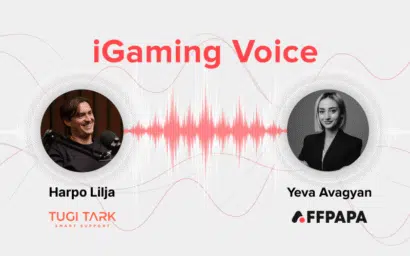
In a recent interview with AffPapa, Harpo Lilja, the founder of Tugi Tark, shared insights on his background in customer support, the challenges operators face in delivering high-quality service, and the future of AI-powered iGaming player support.
Yeva: Harpo, you’ve been running a customer support outsourcing company. Could you share the factors that originally drew you to this market? Has your understanding of customer service changed over the years?
What drew me to customer support was seeing how critical those player interactions were during my time in reactivation. A single conversation could determine whether someone returned or walked away for good. That experience led me to the outsourcing company, where my team and I handled +10 million tickets across 100 brands and 20 markets.
Over those years, I stopped seeing support as reactive and started viewing it as strategic, directly driving retention and loyalty. That shift led me to build Tugi Tark and solve the structural challenges operators face daily.
Yeva: Having worked so closely with support teams yourself, did those early experiences affect your perspective on how technology can improve customer support? Did your hands-on experience affect the way you built Tugi Tark?
Absolutely. Those years on the ground showed me exactly where the pain points were and where technology could make a genuine difference. I watched talented agents handle the same requests dozens of times daily and get buried under repetitive tasks. When we built Tugi Tark, that hands-on experience became our blueprint. We didn’t design features based on what sounded innovative; we built solutions for the actual challenges support teams face in iGaming.
Yeva: Your platform operates on a mix of AI with human expertise. Considering there’s a lot of noise around AI in customer service, do you see this hybrid structure changing the way support teams work day to day?
It’s not just changing how they work. It’s reinventing their roles entirely. AI now handles the majority of routine inquiries instantly, so human agents spend their time on knowledge base and integration management, and when tickets are transferred from AI to human agents, it will be for cases that require more empathy, complex cases involving 3rd party escalations, and compliance oversight instead of answering the same questions repeatedly. The key is that escalations happen seamlessly within one system, so there’s no friction when AI hands off to a human.
We’re watching support professionals evolve from reactive ticket handlers into strategic specialists who train AI, refine policy documentation, and maintain compliance standards. The role is becoming more valuable, not less.
Yeva: You chose to narrow down the focus of Tugi Tark exclusively on iGaming rather than going broad. How do customer support requirements in the iGaming differ from those of other industries?
iGaming customer service operates in a uniquely complex environment that generic solutions simply can’t support. Operators need compliant support across multiple jurisdictions with different regulations. The terminology is specialized, with concepts like rollover requirements and wagering contributions that generic AI won’t understand. Players expect instant responses, so support needs to be fast, accurate, and available 24/7 across multiple languages. Having trained our AI on millions of iGaming-specific tickets, we’ve built a depth of industry intelligence that generalist solutions cannot replicate. This focus is exactly why we decided not to go broad.
Yeva: In what areas do you think operators trying to provide first-rate support are challenged most?
The biggest challenges are scale, speed, and specialization. Traditional support models depend on large multilingual teams, which drive up costs exponentially. Players expect instant responses across time zones and languages, but maintaining that availability requires massive resources. Agents need deep expertise in complex iGaming concepts, evolving regulations, and responsible gaming interventions.
The real problem is that these challenges compound each other. Scaling up increases training costs and makes quality harder to maintain, creating a cycle where solving one issue creates pressure somewhere else.
Yeva: What kind of real-world impact have you seen since the launch of Tugi Tark? Faster response times, enhanced team efficiency, or higher overall player satisfaction?
Even in our early launch phase, we’re seeing impact across all three dimensions. Response times have improved dramatically because AI handles the majority of tickets instantly. Team efficiency has shifted in a more interesting way, with human agents handling tickets based on their skillsets, rather than just more tickets. Player satisfaction follows naturally when they get instant, accurate responses in their own language. What’s most encouraging is watching operators move from skepticism to trust once they see the difference between generic chatbots and purpose-built iGaming AI.
Yeva: What are some of the quite significant challenges support teams still experience to this day that you believe need to change?
Despite technological advancements, support teams are still weighed down by fragmented systems that force support agents to switch between multiple platforms. Language barriers remain persistent, with operators hiring native speakers for every new market before they even know if that market will be profitable.
There’s also a career development gap, with support roles traditionally seen as entry-level positions. As AI automates routine tasks, we need to redefine what it means to be a support professional.
Yeva: What is your take on the changes and developments in player support within the iGaming sector in the next few years?
We’re at a turning point where AI is moving from experimentation to integration. The biggest leap ahead will be execution, with AI agents advancing from answering questions to actually taking action like granting bonuses or executing account related tasks in real time. Systems will become brand-adaptive, reflecting each operator’s unique voice and regulatory framework across multiple languages. Market expansion will be transformed, with AI translation making it possible to deliver local-quality support from day one. Human agents aren’t disappearing; they’re moving to the top of the value chain as strategic specialists who make AI effective at scale.
Company: Tugi Tark
Interviewee: Harpo Lilja
Date: 13.01.2026







 Soft2Bet launches Swedish casino and sportsbook: Lodur
 Entain CEO supports the ban on illegal UK gambling sponsors
 Wynn Resorts addresses data breach and ransom demand claims Soft2Bet launches Swedish casino and sportsbook: Lodur Entain CEO supports the ban on illegal UK gambling sponsors